Welding
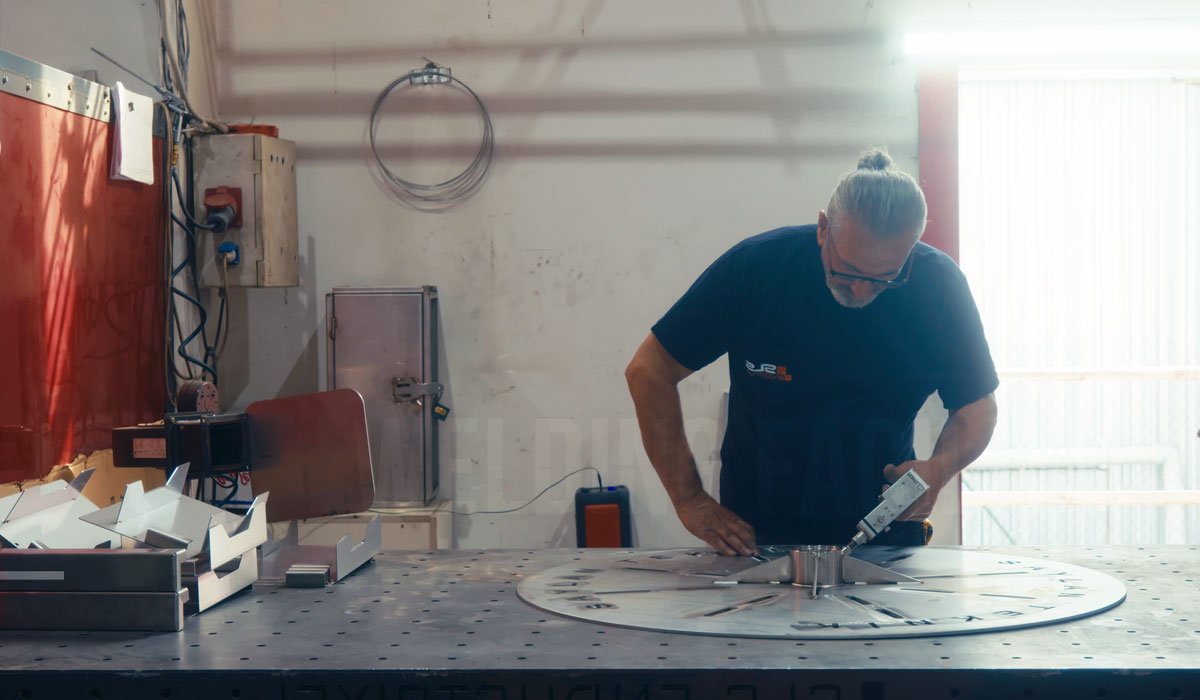
What is Laser Welding?
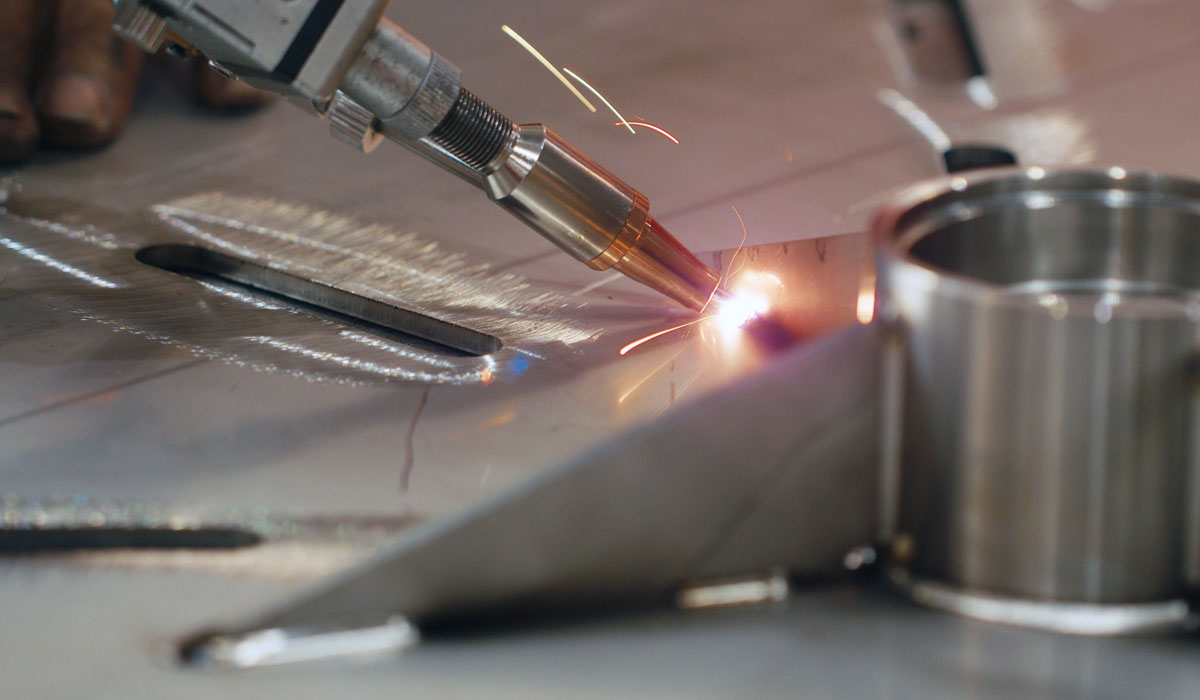
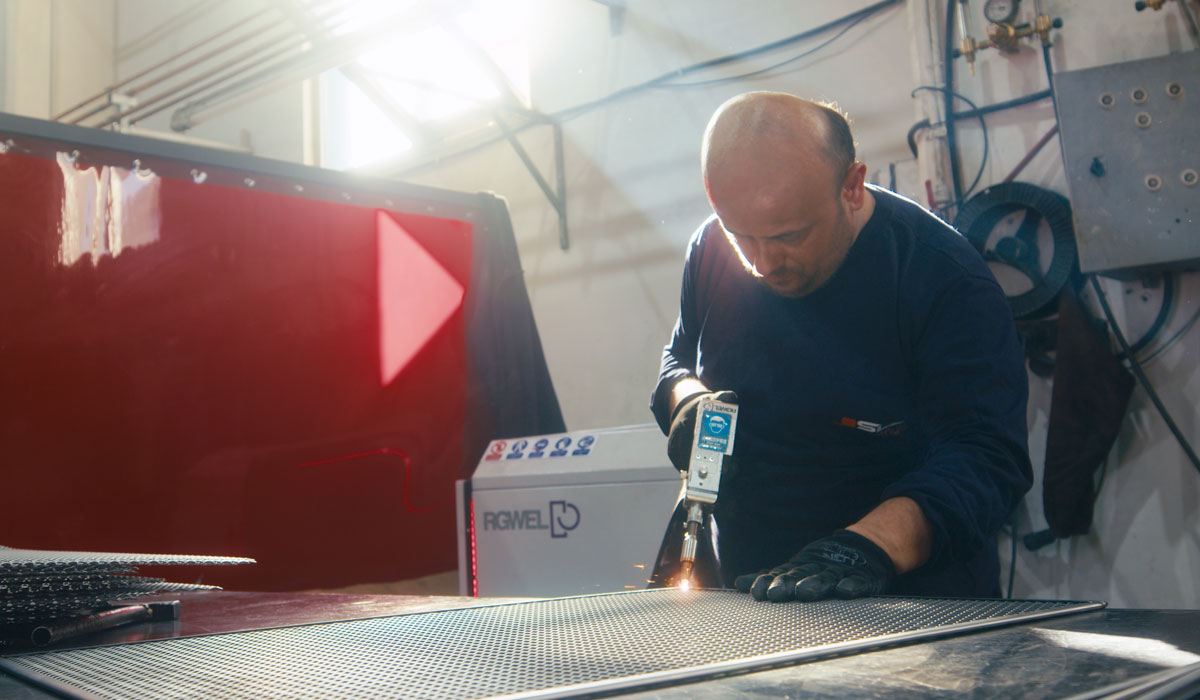
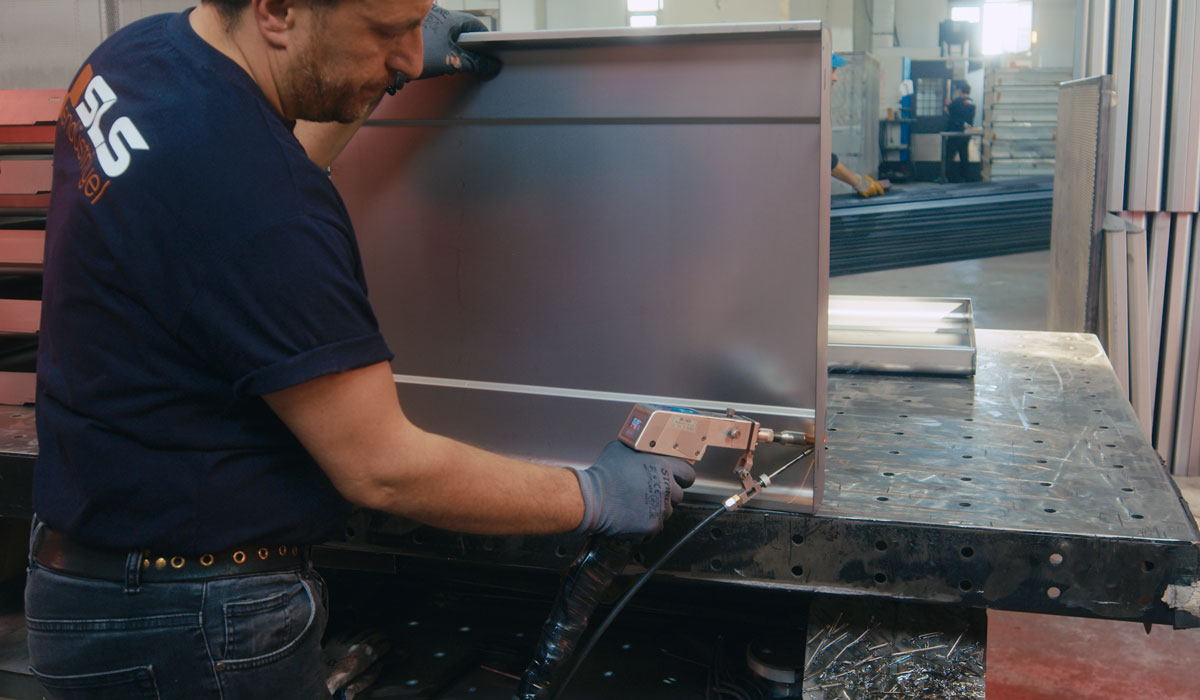
Laser welding is a modern welding method that enables precise and controlled joining of metal materials using a high-energy laser beam. In this method, the laser beam is focused to a very small point, creating high heat density that melts the surfaces to be joined, forming a strong bond. As a non-contact process that creates a narrow heat-affected zone, it is preferred in applications requiring high precision.
Working Principle of Laser Welding
In the laser welding process, the laser beam is directed to the joining point through optical systems. Thanks to the high energy density, the material melts quickly and a weld pool forms. A solid weld seam is obtained through the controlled solidification of the molten metal. With CNC-controlled systems, the welding line is tracked precisely, providing repeatable results.
Types of Laser Welding
Laser welding systems are produced in different types depending on the laser source used. CO₂ laser welding, Nd:YAG laser welding, and fiber laser welding are the most commonly used technologies. Today, especially fiber laser systems stand out due to their high efficiency, low maintenance requirements, and energy savings. Additionally, continuous wave and pulsed laser welding methods are also preferred depending on the application needs.
Application Areas of Laser Welding
Laser welding is used in many sectors such as automotive, aviation, defense industry, medical equipment manufacturing, electronic housing systems, and precision metal fabrication. It provides significant advantages in joining thin materials and in applications requiring aesthetic welding. It is widely used in mass production lines, especially when integrated with robotic systems.
Importance of Laser Welding in the Production Process
The laser welding method optimizes production processes by offering high speed and precision. Thanks to the narrow heat-affected zone, material deformation remains minimal, reducing the need for additional correction processes. Its automation-compatible structure enables standard quality in mass production. These features have made laser welding an important part of modern manufacturing systems.
Heat Affected Zone (HAZ) in Laser Welding
One of the most important advantages of the laser welding method is the creation of a narrow Heat Affected Zone (HAZ). Since a more controlled and concentrated heat source is used compared to traditional welding methods, thermal deformation around the material remains minimal. This is of great importance, especially when welding thin and delicate parts. Thanks to the narrow HAZ, the mechanical properties of the material are preserved and the need for subsequent correction processes is reduced.
Automation and Robotic Integration in Laser Welding
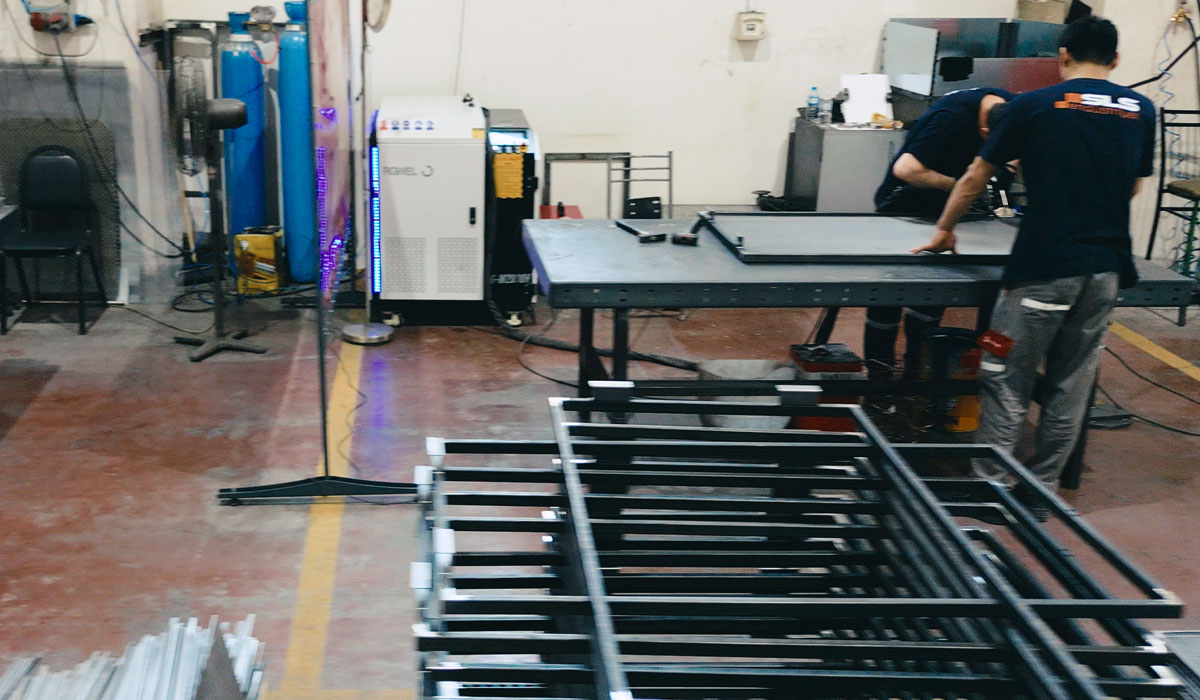
Laser welding systems can be easily integrated with automation and robotic lines. Thanks to CNC-controlled motion systems, the welding line is tracked with millimeter precision. Robotic laser welding applications provide significant advantages both in terms of speed and quality in mass production processes. Reducing operator intervention minimizes human error while increasing production continuity.
Material Compatibility in Laser Welding
The laser welding method can be successfully applied on carbon steel, stainless steel, aluminum, and some alloy metals. Effective results can also be achieved in joining different materials through controlled energy use. However, the appropriate laser power, welding speed, and focus settings must be determined for each material. Correct parameter selection is one of the fundamental factors that directly affect welding quality.
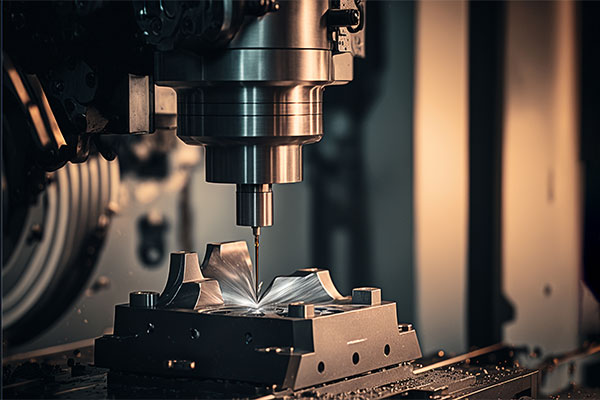
Press Manufacturing
We provide services using eccentric and hydraulic presses of various capacities and technologies according to customer needs. (80-200 tons)
Contact Information
- Istanbul AYOSB, Aydınlı, 3. Sk. no:3, 34956, 34935 Tuzla/Istanbul
- +90(216) 415 76 40
- export@slsendustriyel.com
What is MIG/MAG Welding?
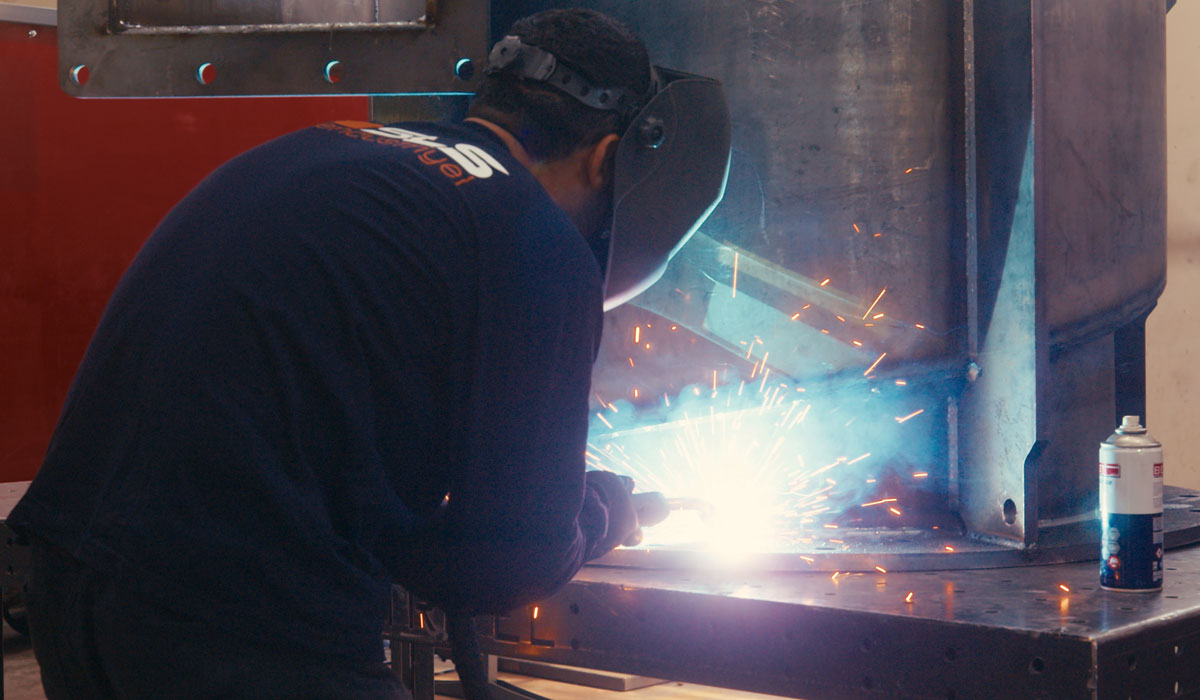
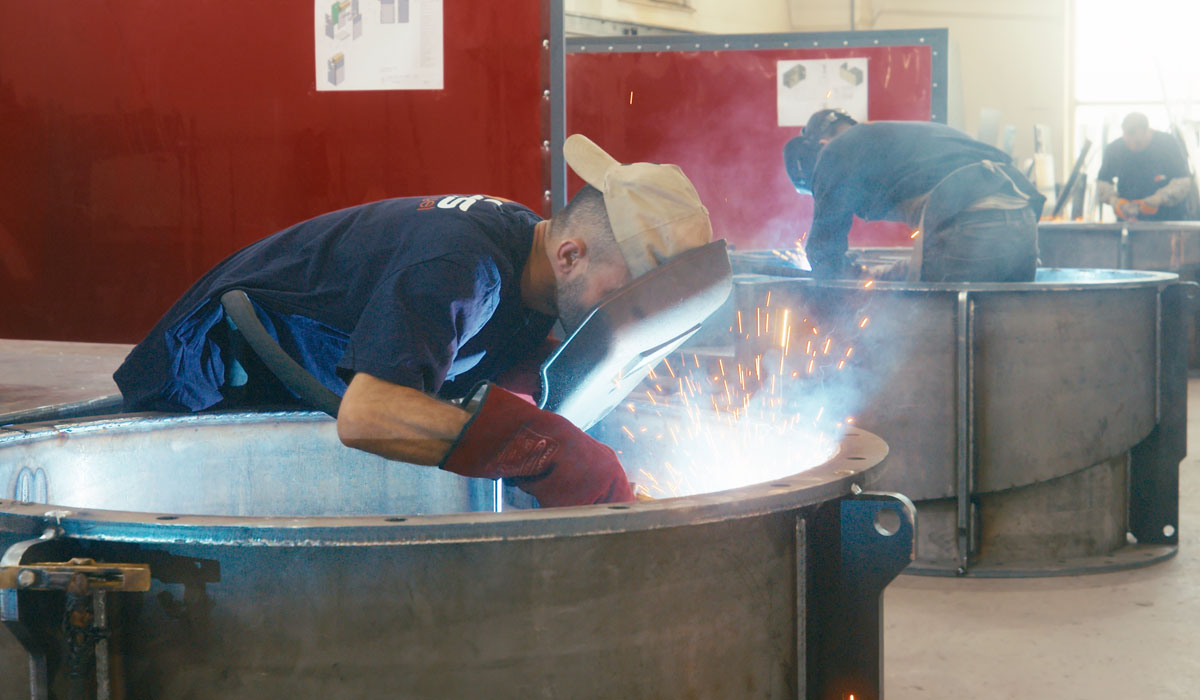
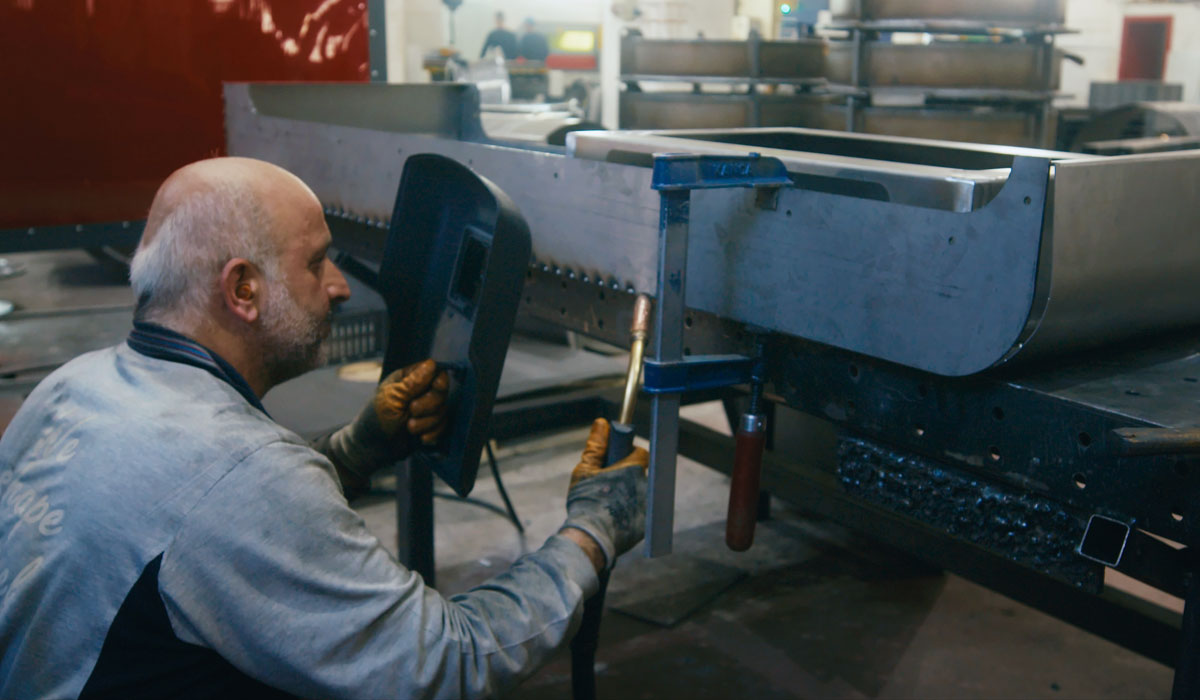
MIG/MAG welding is a fusion welding method that uses an electric arc and a consumable wire electrode to join metal materials. The welding zone is surrounded by a shielding gas to protect it from the adverse effects of the external environment. Depending on the type of gas used, the method is called MIG (Metal Inert Gas) or MAG (Metal Active Gas). It is widely preferred in industrial production due to its high speed and efficiency.
Working Principle of MIG/MAG Welding
In the MIG/MAG welding process, an electric arc is established between the continuously fed wire electrode and the workpiece. Thanks to the high temperature generated by the arc, both the wire and the base material melt, forming a weld pool. The simultaneously supplied shielding gas protects the molten metal from atmospheric gases such as oxygen and nitrogen. After solidification, a solid and integrated weld seam is obtained.
Types of MIG/MAG Welding
MIG/MAG welding methods are divided into two main groups as MIG and MAG according to the type of gas used. While inert gases such as argon or helium are used in MIG welding, carbon dioxide or mixed gases are preferred in MAG welding. There are also different transfer modes such as short-circuit, spray, and pulsed current. The method to be chosen is determined according to the material type and application needs.
Application Areas of MIG/MAG Welding
MIG/MAG welding is used in many sectors such as the automotive industry, steel construction, machine manufacturing, shipbuilding, and metal furniture production. It provides effective results in joining medium and thick sheets. Thanks to its mass production-compatible structure, it is widely applied on production lines when integrated with robotic systems.
Importance of MIG/MAG Welding in the Production Process
The MIG/MAG welding method accelerates production processes thanks to its high welding speed and continuous wire feeding system. Not requiring electrode replacement does not interrupt the workflow. Its automation-compatible structure ensures standard quality. This is an important advantage especially for businesses engaged in mass production.
Wire Electrode Selection in MIG/MAG Welding
The wire electrode used in MIG/MAG welding is one of the fundamental factors that directly affect welding quality. The diameter, chemical composition, and coating properties of the wire must be determined according to the type of material to be joined. Incorrect wire selection can lead to a weak weld seam or loss of mechanical strength. With the correct wire, the weld pool forms more stably and a homogeneous seam is obtained.
Importance of Shielding Gas in MIG/MAG Welding
Shielding gas is one of the most critical components of MIG/MAG welding. When the molten metal during welding comes into contact with the atmosphere, it can oxidize and porosity can form. Therefore, the type and flow rate of the gas used must be set correctly. Argon, carbon dioxide, or gas mixtures are preferred in different applications. Appropriate gas selection improves the quality and surface cleanliness of the weld seam.
Parameter Settings in MIG/MAG Welding
Parameters such as welding current, voltage, wire feed speed, and gas flow rate are important factors that determine MIG/MAG welding performance. Incorrect parameter settings can cause problems such as spatter, incomplete penetration, or burn-through. In modern MIG/MAG welding machines, these settings can be made precisely thanks to digital control systems. The correct parameter combination is of great importance both in terms of quality and efficiency.
Long-Term Production Advantages of MIG/MAG Welding
MIG/MAG welding reduces long-term production costs thanks to continuous wire feeding and fast processing time. The absence of electrode replacement requirements and its mass production-compatible structure provide important advantages for businesses. Additionally, durable and reliable weld seams increase product lifespan and raise customer satisfaction. In this regard, MIG/MAG welding offers both an economical and high-quality solution in modern production.
Press Manufacturing
We provide services using eccentric and hydraulic presses of various capacities and technologies according to customer needs. (80-200 tons)
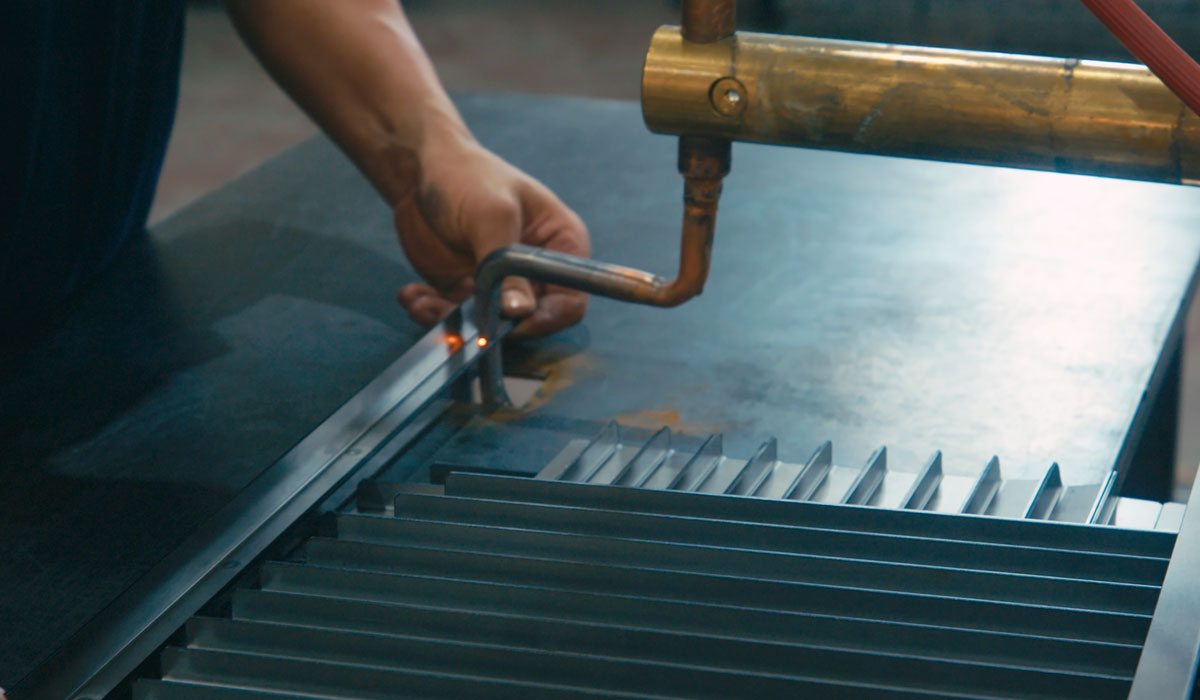
What is Spot Welding?
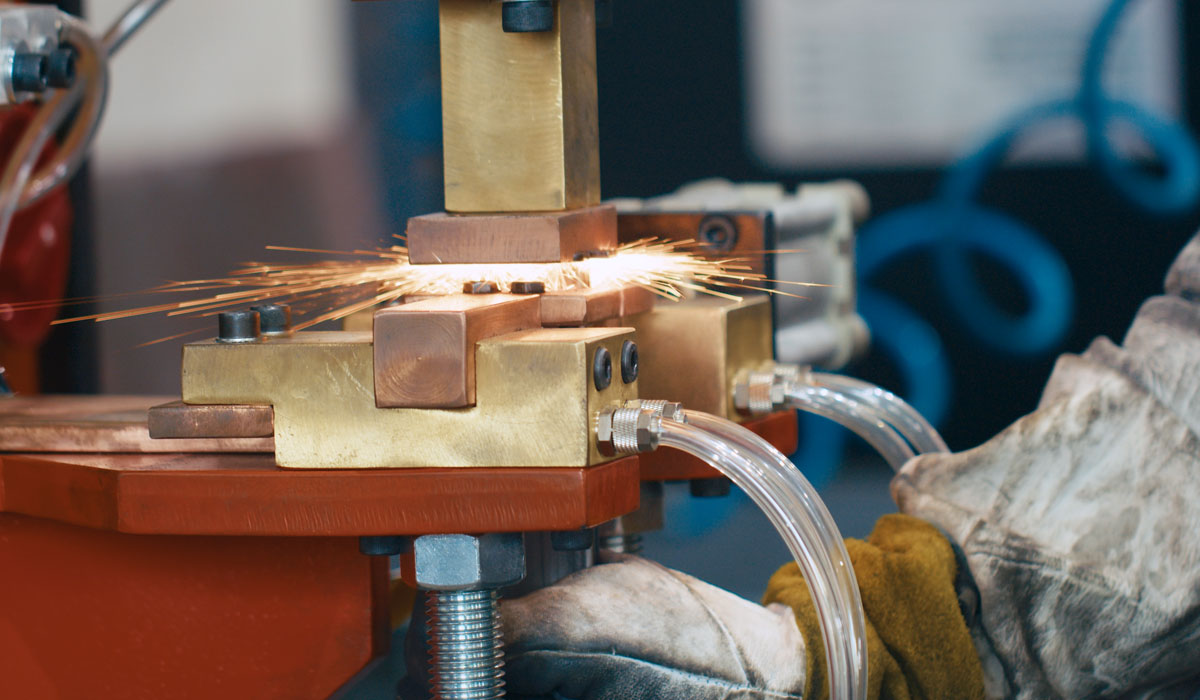
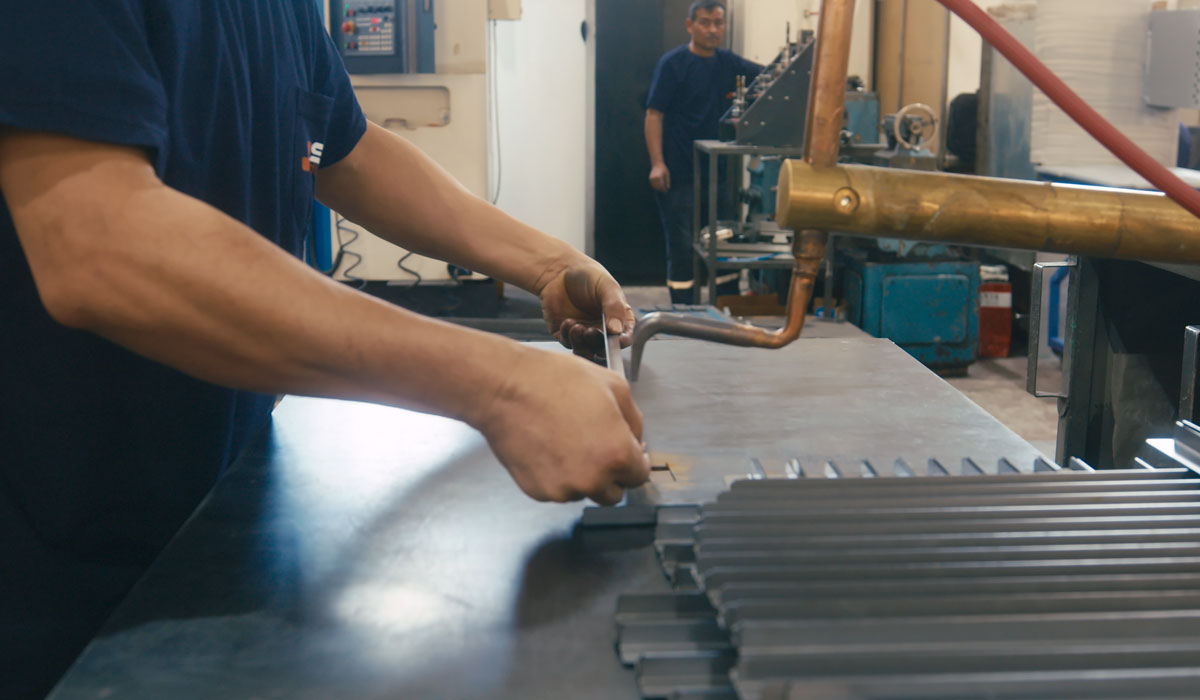
Spot welding is a welding method that joins two or more metal sheets at specific points using electrical resistance and pressure. This method is generally used for joining thin sheet materials and does not require additional filler material. Since the welding process takes place only at the defined contact points, it offers a fast and economical joining solution.
Working Principle of Spot Welding
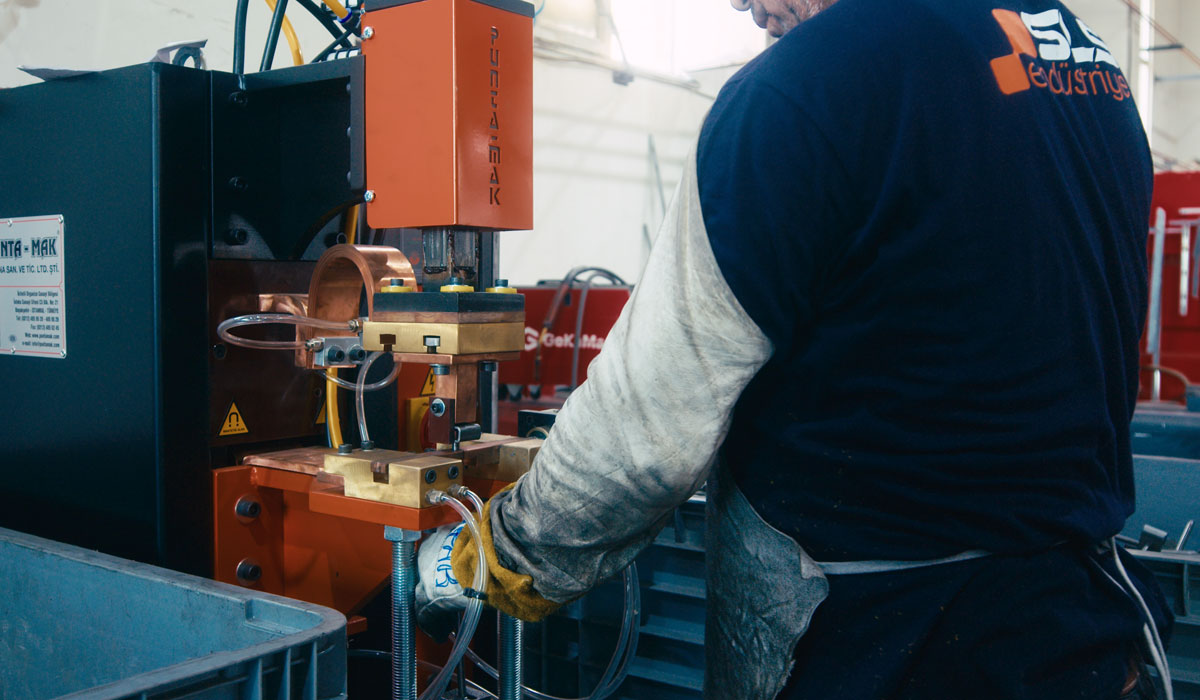
In the spot welding process, the sheet metal plates to be joined are clamped between copper electrodes. High electrical current is transmitted to the material through the electrodes. Thanks to the electrical resistance of the metal, heat is generated at the contact point and this area melts to form the weld nugget. After the current is cut, the metal solidifies under the applied pressure and a strong bond forms. The processing time is very short and it is suitable for mass production.
Types of Spot Welding
Spot welding systems can be designed in different types, including manual, pneumatic, hydraulic, and robotic. While manual systems are preferred for small-scale production, robotic spot welding machines are widely used in mass production sectors such as automotive and white goods. There are also single-point welding machines and multi-point welding systems.
Application Areas of Spot Welding
Spot welding is heavily used in body joining processes in the automotive industry in particular. It is also a common method in white goods production, metal furniture manufacturing, sheet metal enclosures, and electrical panel production. It is preferred in all applications where thin sheets need to be joined quickly and firmly.
Importance of Spot Welding in the Production Process
The spot welding method provides significant advantages on production lines thanks to its ability to be applied at high speed and its automation-compatible structure. Operating costs are low since no additional welding wire or gas is used. At the same time, the short processing time contributes to increased production capacity. It plays a critical role in terms of efficiency in mass production facilities.
Contribution of Spot Welding to Product Quality
Joints created by spot welding provide high strength when correct parameters are used. Since the weld points are homogeneous and repeatable, assembly quality increases. Additionally, thanks to the low deformation rate, surface distortion on the sheet remains minimal. In this regard, spot welding holds an important place in industrial production as both an economical and high-quality joining method.
Importance of Parameter Settings in Spot Welding
The quality of the spot welding process depends on the correct setting of current, pressure, and time parameters. Insufficient current causes incomplete formation of the weld nugget, while excessive current can cause burning and deformation on the material surface. Similarly, incorrect adjustment of electrode pressure can lead to voids or weak joints at the weld point. Therefore, parameters in spot welding machines must be carefully set according to the material thickness and type.
In modern spot welding systems, parameter settings can be made precisely thanks to digital control panels. This makes it possible to achieve standard quality in production and to ensure repeatable results.
Electrode and Maintenance Processes in Spot Welding
The electrodes used in spot welding are generally copper alloy and produced from materials with high thermal conductivity. The shape and surface cleanliness of the electrode tips directly affect welding quality. Worn or contaminated electrodes can cause irregular weld points and quality loss. Therefore, electrode tips must be regularly inspected and replaced when necessary.
Maintenance processes are not limited to electrodes. Machine connections, cooling systems, and electrical transmission lines must also be periodically inspected. Spot welding machines that receive regular maintenance operate more stably and reduce the risk of failure during production. This provides important advantages both in terms of quality continuity and production efficiency.
Press Manufacturing
We provide services using eccentric and hydraulic presses of various capacities and technologies according to customer needs. (80-200 tons)
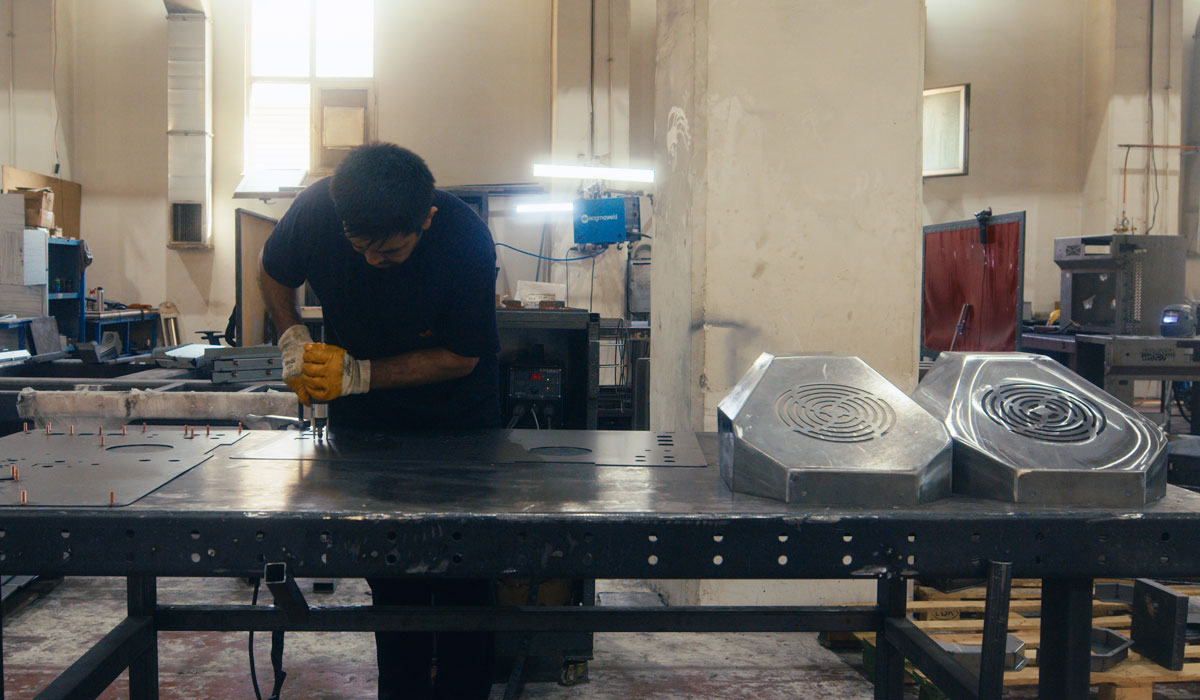
What is a Stud Welding Machine?
A stud welding machine is an industrial welding equipment that permanently joins fasteners such as studs, bolts, or pins to metal surfaces using high current and pressure. This method eliminates the need for drilling, nut installation, or the use of additional fasteners. Stud welding technology is particularly preferred for creating strong and reliable connections on thin and medium-thickness metal sheets.
Working Principle of Stud Welding
In the stud welding process, the stud part is placed on the workpiece using a welding gun. High electrical current is applied by the machine in a very short time, and the tip of the stud and the base material surface are locally melted. Then a controlled pressure is applied to form a metallurgical bond between the two materials. The processing time is in the order of milliseconds and surface deformation after welding is minimal.
Types of Stud Welding Machines
Stud welding machines are generally divided into two main groups: arc stud welding and capacitor discharge (CD) stud welding. While arc stud welding is used for thicker materials and applications requiring high strength, capacitor discharge systems are preferred for thin sheets and sensitive surfaces. Manual, semi-automatic, and automatic systems are also available depending on the application area.
Application Areas of Stud Welding Machines
Stud welding machines are used in many sectors such as steel construction, shipbuilding, automotive industry, white goods production, electrical panels, and machine manufacturing. They are widely preferred on mass production lines especially because they speed up the assembly process and provide strong connections. They offer an effective solution in applications where threading on thin sheet is difficult.
Press Manufacturing
We provide services using eccentric and hydraulic presses of various capacities and technologies according to customer needs. (80-200 tons)
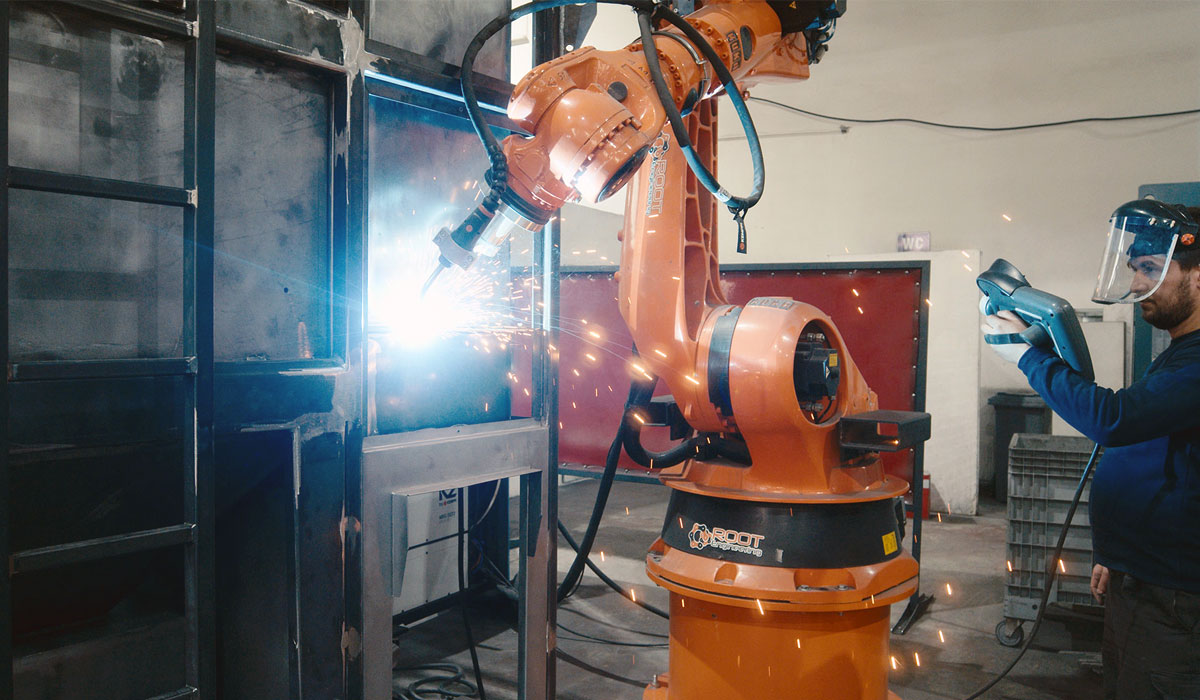
What is Robotic Welding?
Robotic welding is a modern manufacturing technology that enables welding operations to be carried out automatically by industrial robots. In these systems, the robot arm follows pre-programmed movements to move the welding torch along the designated line, joining metal parts. Robotic welding systems are preferred especially in sectors requiring high precision, repeatability, and mass production.
Working Principle of Robotic Welding
In robotic welding systems, the robot arm moves together with the welding torch according to programmed coordinates. The parts to be welded are placed on a fixed fixture and the robot advances along the defined weld seam to perform the operation.
During this process, the robot control unit continuously monitors welding current, wire feed speed, torch angle, and travel speed. This ensures that the same quality and standard of weld is obtained on every part. These systems, which minimize human error, provide high accuracy and stability in production.
Types of Robotic Welding Systems
Robotic welding systems can be used with various technologies depending on different production needs. The most commonly used robotic welding methods are MIG/MAG robotic welding, TIG robotic welding, and resistance robotic welding.
MIG/MAG robotic welding systems are generally preferred in the automotive, white goods, and metal manufacturing sectors. TIG robotic welding technologies are used in applications requiring more precise and clean welding. Fully automatic robotic welding cells in which multiple robots work simultaneously on large production lines are also widely used.
Application Areas of Robotic Welding
Robotic welding technology is widely used in many industrial production areas. Robotic welding systems play a major role especially in the automotive sector for joining chassis and body parts.
In addition, robotic welding solutions are also preferred in metal construction production, machine manufacturing, white goods production, energy equipment, and heavy industry applications. Robotic welding systems offer significant advantages on all production lines requiring high production volumes and consistent quality.
Contribution of Robotic Welding to Production Efficiency
Robotic welding systems provide significant contributions to production processes in terms of speed, quality, and safety. Since robots continuously perform the same operation with the same accuracy, standard quality is achieved in production. Additionally, long and repetitive welding operations that are difficult to perform manually can be easily carried out by robots.
Thanks to these systems, production speed increases while the error rate also decreases significantly. Thanks to its automation-compatible structure, robotic welding technology has become one of the key solutions that increase efficiency in modern production facilities.
Press Manufacturing
We provide services using eccentric and hydraulic presses of various capacities and technologies according to customer needs. (80-200 tons)
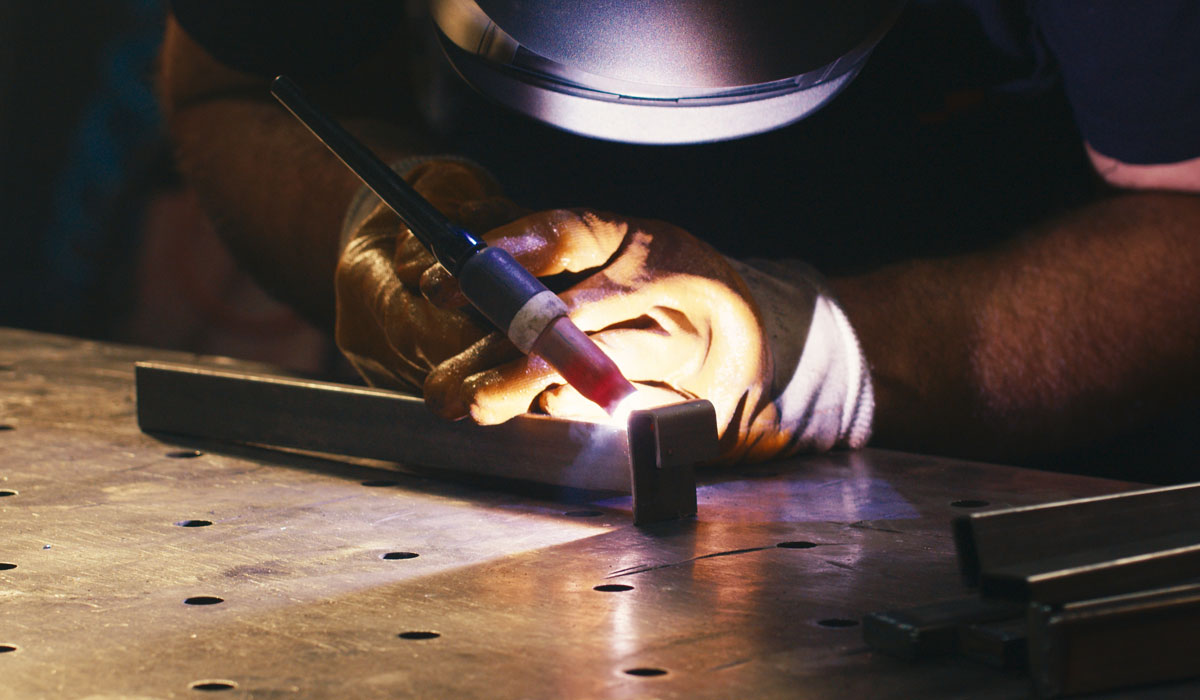
The Role of Tungsten Electrode in TIG Welding
The tungsten electrode used in TIG welding is a non-consumable electrode and ensures stable arc formation. The diameter and tip shape of the electrode are determined according to the welding current and material type. Correct electrode selection improves arc stability and ensures a more controlled formation of the weld pool. Worn or contaminated electrodes can cause arc instability and a decrease in welding quality.
Importance of Shielding Gas in TIG Welding
Argon gas isolates the welding zone from the atmosphere, preventing oxidation and porosity formation. Being an inert (non-reactive) gas, it ensures that the weld seam is clean and smooth. If the gas flow rate is insufficient, darkening and quality loss may occur on the weld surface. Therefore, correct adjustment of gas flow and purity is of great importance.
Parameter Control in TIG Welding
Parameters such as current intensity, arc length, and filler wire usage directly affect welding quality in TIG welding. Especially for thin materials, lower current must be used, while higher current is preferred for thicker materials. With correct parameter settings, penetration is controlled and deformation is kept to a minimum. Precise settings can be made with digital control systems in modern TIG machines.
The Place of TIG Welding in Precision Manufacturing
TIG welding is a preferred method in applications requiring high precision. It provides superior surface quality when joining thin sheets and working with materials such as stainless steel and aluminum. It offers a clean and smooth weld seam, especially in applications where aesthetic appearance is important. Therefore, it is widely used in medical equipment, food machinery, and decorative metal production.
Long-Term Quality Advantages of TIG Welding
Seams obtained by TIG welding have a smooth and durable structure. The low spatter rate reduces the need for subsequent cleaning. Thanks to precise heat control, material properties are preserved and the risk of cracking is reduced. In this regard, TIG welding holds an important place in industrial production as a high-quality and long-lasting joining method.
Filler Wire Usage in TIG Welding
The use of filler wire in TIG welding is preferred depending on the thickness of the parts to be joined and the weld groove configuration. For thin materials, joining can sometimes be done by melting only the base material without using filler wire. However, for thick or strength-critical applications, filler wire of appropriate diameter and alloy must be used. Correct filler wire selection increases the mechanical strength of the weld seam and reduces the risk of cracking. Additionally, the filler wire being clean and oxide-free is important for maintaining welding quality.
Importance of Operator Skill in TIG Welding
TIG welding requires more operator precision than many other welding methods. Keeping the arc length constant, feeding the filler wire at the correct angle, and moving the torch in a controlled manner play a decisive role in achieving a quality weld seam. The operator's experience directly affects the smoothness of the weld surface and the depth of penetration. Therefore, working with trained and experienced personnel in TIG welding applications is of great importance for the continuity of production quality.
Press Manufacturing
We provide services using eccentric and hydraulic presses of various capacities and technologies according to customer needs. (80-200 tons)

Policies