Press Brake Bending
What is Press Brake Bending?
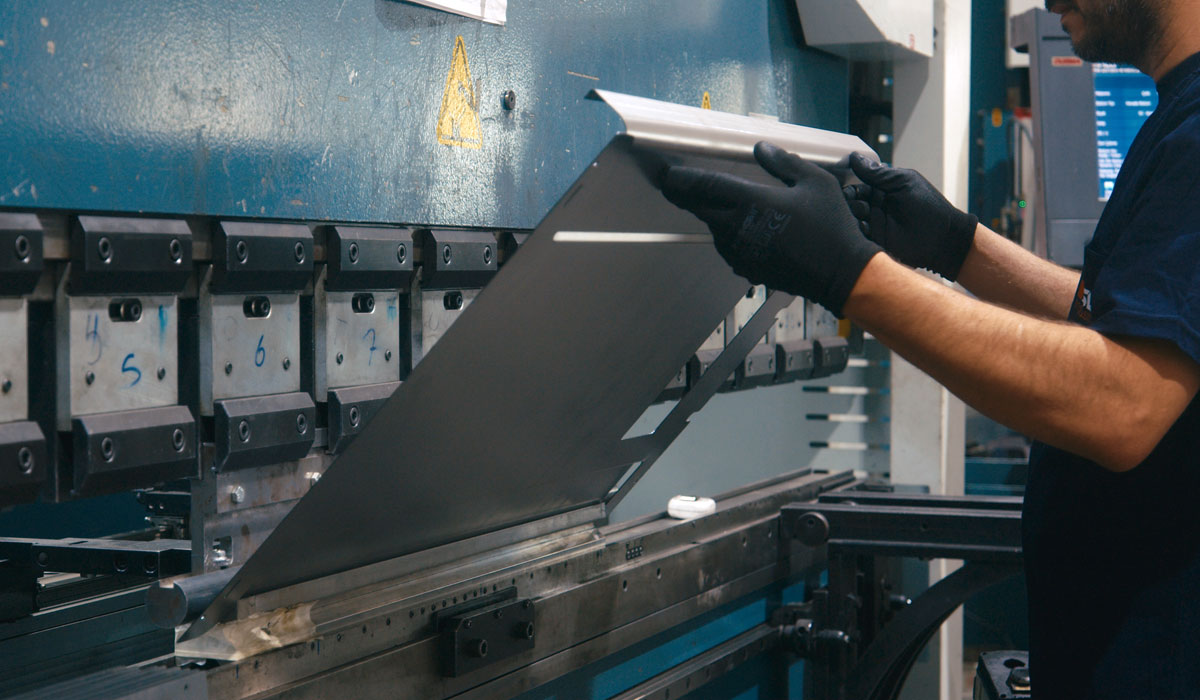
Press brake bending is a sheet metal forming method used to shape metal sheets or plates at a specific angle and form. This operation is carried out by placing the workpiece between a punch and die set and applying vertical force. Press brake machines allow a wide variety of bending operations to be performed, from simple geometries to complex parts. It is widely used in many sectors such as automotive, aviation, machine manufacturing and metal workshops.
Types of Press Brake
Press brake machines are basically divided into two main groups: mechanical and hydraulic. Mechanical press brakes operate with an electric motor and flywheel mechanism and were widely used in the past. However, over time they have been replaced by hydraulic press brakes due to the dependence of stroke settings on operator skill and safety limitations. Hydraulic press brakes operate with the help of two hydraulic cylinders and provide a more stable force distribution. Thanks to its 100% steel body structure, it is more durable and offers long-lasting use. Today, hydraulic press brakes are the most widely preferred systems due to their economic and safety advantages.
Structure and Working Principle of Press Brake Machines
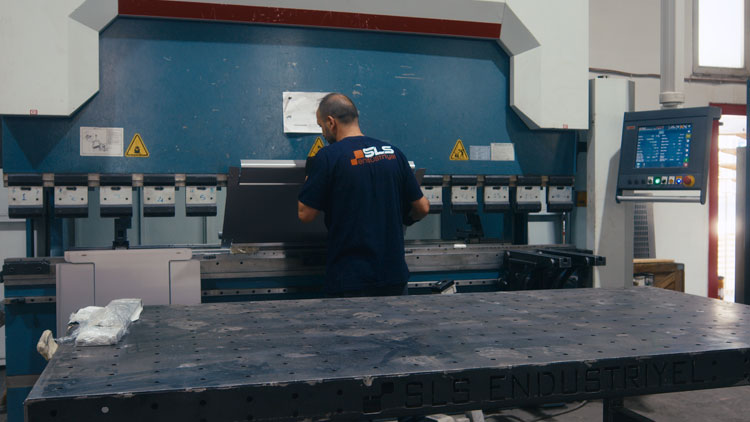
Press brake machines generally have two C-shaped side bodies, with the lower part connected to a fixed table and the upper part to a moving beam. The lower die is mounted on the machine table and the upper punch is mounted on the moving beam. During operation, the metal sheet is placed on the die and the sheet is bent by the downward movement of the upper beam to achieve the desired shape. The machine has the ability to apply high force in a limited vertical area and performs precise metal forming operations with this feature.
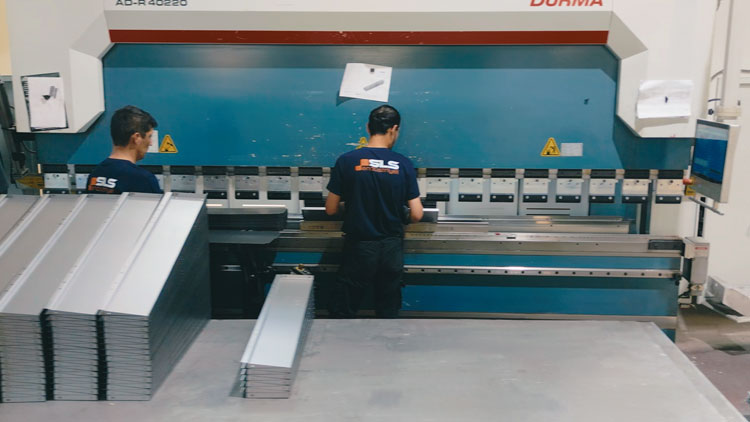
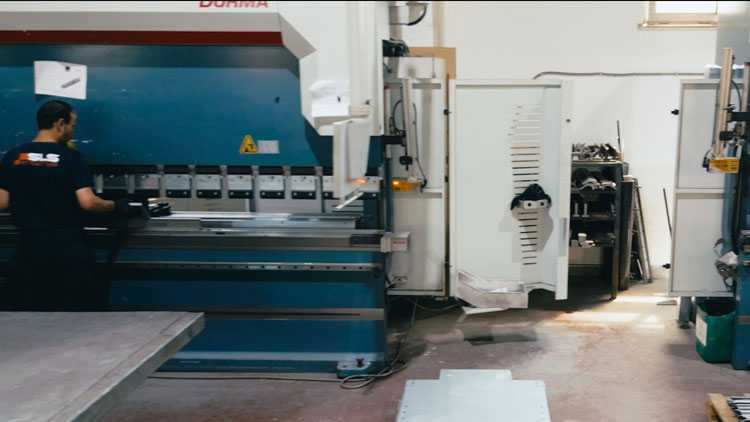
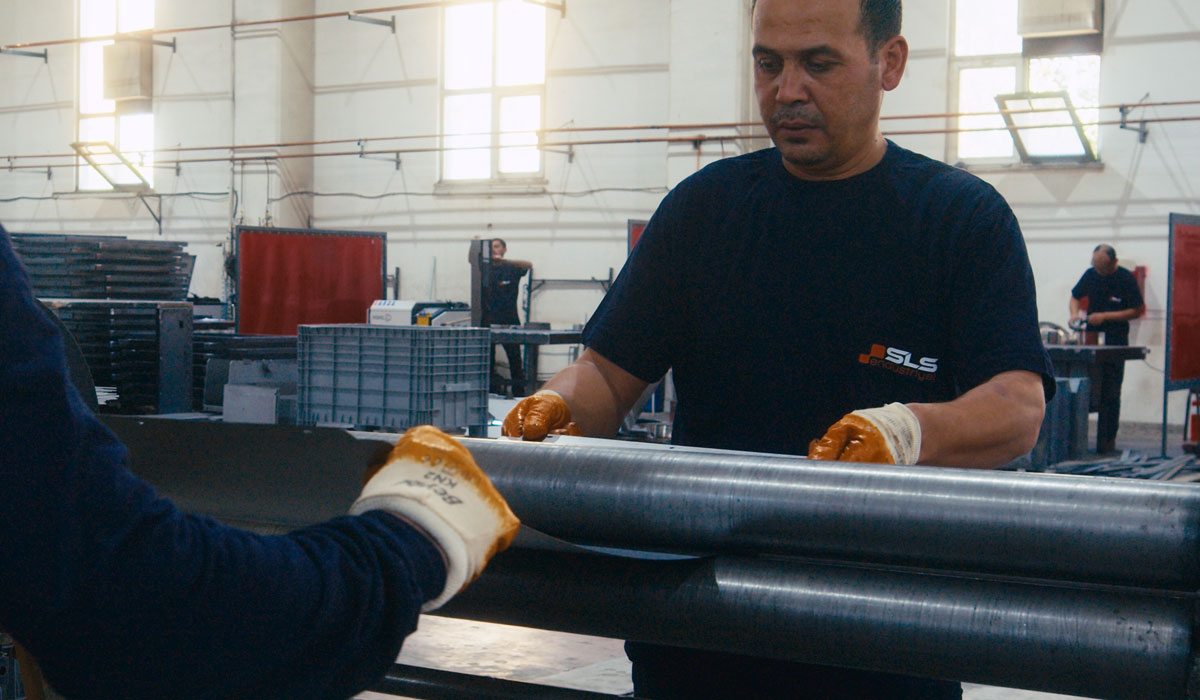
Parts brought to life by laser cutting take shape in SLS Industrial's high-technology press brakes. Thanks to our modern CNC control units, we perform even the most complex bending operations within millimetric tolerances. Regardless of material thickness and type, without compromising angular precision, we ensure that your projects come together with perfect compatibility at the assembly stage.
Contact Information
- İstanbul AYOSB, Aydınlı, 3. Sk. no:3, 34956, 34935 Tuzla/İstanbul
- +90(216) 415 76 40
- export@slsendustriyel.com
What is Bending?
Bending is the process of permanently shaping metal sheets or plates by giving them a specific angle or form. During this process, the material undergoes elastic and plastic deformation and retains its new shape after the applied force is removed. The bending process is one of the most widely used forming methods in sheet metal manufacturing and is generally applied after cutting operations.
Basic Principle of the Bending Process
The bending process is based on shaping metal under pressure between a punch and a die. The applied force exceeds the yield limit of the material, creating plastic deformation. During bending, compressive stresses occur on the inner surface of the metal and tensile stresses on the outer surface. The balanced distribution of these stresses ensures the correct bending angle and surface quality are achieved.
Types of Bending
The bending process is divided into different types according to the die used and the method of application. The most common types of bending include V-bending, U-bending, edge bending and double die bending methods. The type of bending selected is determined by the part geometry, sheet thickness and desired bending angle. The correct bending method minimises material losses and shape errors.
Materials Used in Bending
The bending process can be applied to a wide variety of metals such as low carbon steels, stainless steels, alloy steels, aluminium and copper alloys. Since the modulus of elasticity, yield strength and ductility of each material are different, bending parameters must be adjusted according to the material. Otherwise, cracking, springback or dimensional errors may occur.
Springback in Bending
One of the most important problems encountered during the bending process is springback. Springback is the tendency of the metal to partially return to its original shape after the bending force is removed. This is more pronounced especially in high-strength and thin sheets. To reduce springback, smaller die angles, higher bending forces or CNC-controlled machines are preferred.
The Role and Importance of Bending in Industry
The bending process is an indispensable part of metal forming processes. It is widely used in the automotive, white goods, aviation, defence industry and construction sectors. Thanks to its high accuracy, repeatability and production speed, it is preferred both in small-scale workshops and in industrial facilities that carry out mass production. In modern production systems, CNC-controlled bending machines improve quality while reducing production costs.

Policies